English
 Español
Green Ohm
Green Ohm
Green Ohm
Green Ohm
Green Ohm
Green Ohm
Green Ohm
Green Ohm
Green Ohm
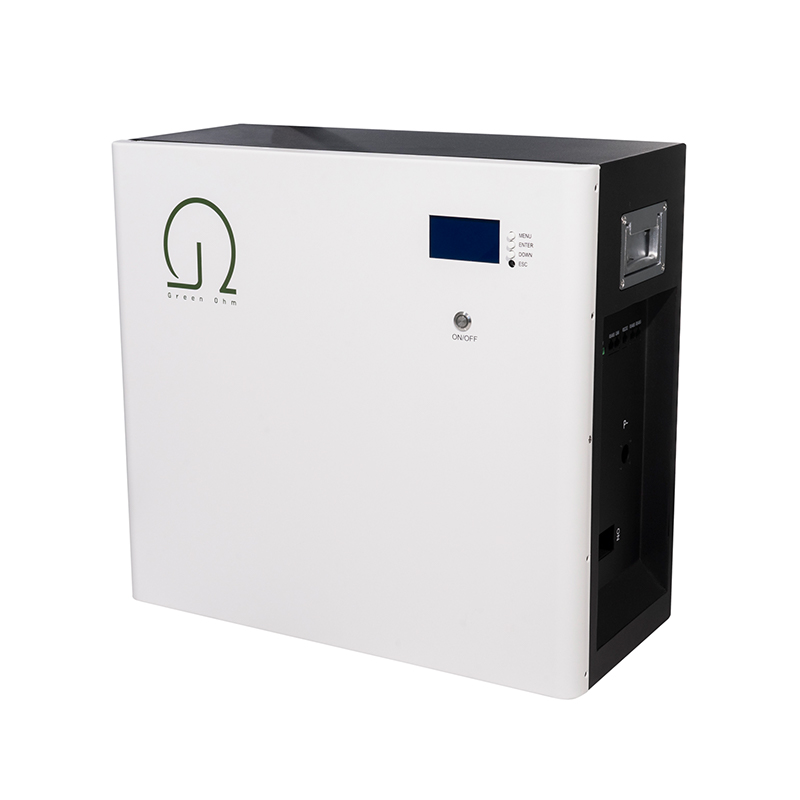
Choosing a residential battery system involves more than deciding how much energy to store. A household may have sufficient battery capacity on paper but still struggle to operate certain appliances if the system's output power does not match the actual electrical load. Air conditioners, pumps, refrigerators, and other motor-driven equipment may have different operating and starting requirements. For buyers comparing a Residential ESS System Supplier, understanding the relationship between battery capacity, inverter output, and household load demand is essential to selecting a system that fits its intended purpose.
Why Are Battery Capacity and Output Power Different?
Battery capacity describes how much energy can be stored, usually expressed in kilowatt-hours (kWh). Output power, measured in kilowatts (kW), describes how much power the system can deliver at a given time.
These specifications serve different purposes. A battery with substantial storage capacity may support household consumption over a longer period, but its inverter must still provide sufficient power for the appliances operating simultaneously.
Buyers should therefore evaluate both figures instead of comparing storage capacity alone. The required combination depends on the household's consumption pattern, the equipment that needs to operate together, and whether the system is intended for daily energy management, backup power, or both.
Which Household Appliances Require Closer Attention?
Not every appliance places the same demand on an energy storage system. Lighting, routers, and many electronic devices generally have different power requirements from equipment containing electric motors or heating elements.
Before selecting a system, buyers should identify the appliances that are essential to the household and review their electrical specifications. Particular attention should be given to equipment that draws high power or requires additional power during startup.
A practical assessment should consider:
- The rated power of each essential appliance
- Which appliances may operate at the same time
- Starting requirements for motors and compressors
- The expected duration of operation during an outage
- Any load restrictions specified for the inverter or battery system
This information gives installers and manufacturers a clearer basis for evaluating system suitability.
How Should Backup Loads Be Planned?
When a residential ESS is intended to provide backup power, the first decision should be which circuits need to remain operational during a grid interruption. Some households prioritize lighting, refrigeration, communication equipment, and selected outlets. Others may also require support for additional appliances, depending on the system's capabilities.
Trying to power every household circuit can increase the required output power and stored energy. A more practical approach is to distinguish essential loads from those that can remain disconnected during an outage.
Manufacturers can help buyers review these requirements and identify a configuration that aligns with the intended backup arrangement. The final design must also account for the inverter's rated output, permitted overload behavior, and any limitations on simultaneous appliance operation.
What Should Buyers Know About Starting Current?
Some appliances require more power briefly when they start than they consume during normal operation. Compressors, pumps, and other motor-driven devices are common examples.
If the inverter cannot accommodate the relevant starting demand, the appliance may fail to start or trigger system protection. This issue can occur even when the battery has plenty of stored energy.
For this reason, buyers should not rely solely on the wattage shown during normal operation. They should confirm the appliance's starting characteristics and compare them with the inverter's documented surge capability, including how long that capability is available. Compatibility should be assessed for the complete system rather than inferred from a single specification.
Can Operating Priorities Improve System Planning?
Household energy needs can change throughout the day. Several appliances may operate simultaneously in the evening, while daytime consumption may be supported partly by solar generation.
Understanding these patterns can help buyers determine whether they need a higher output rating, greater storage capacity, or a different approach to managing loads. Where supported by the system, load scheduling or energy management functions may help coordinate electricity use with available power.
However, control features cannot compensate for equipment that falls outside the system's electrical limits. Buyers should first confirm the required power and energy levels, then assess which management functions would provide practical value.
What Information Should Be Confirmed Before Ordering?
A clear technical brief helps manufacturers recommend an appropriate configuration and reduces uncertainty before installation. Buyers should prepare the main electrical requirements rather than submitting only a general request for a home battery.
The specification should identify the expected loads, simultaneous operating requirements, desired backup duration, existing solar equipment where applicable, and installation conditions. It should also distinguish between essential backup circuits and appliances that will remain connected to the normal grid supply.
Manufacturers can then review battery capacity, inverter output, compatibility, and system protection requirements together. This process is more useful than selecting equipment based on capacity or price in isolation.
How Can the Right Supplier Support Better System Matching?
A suitable residential energy storage system must balance stored energy with the power needed to operate connected equipment. Capacity affects how long energy may be available, while inverter output and startup capability determine which loads the system can support under specified conditions.
For distributors, installers, and project buyers, a Residential ESS System Supplier should be able to explain these differences and help translate household requirements into a clear technical configuration. From a manufacturer's perspective, careful load assessment before ordering is an important step toward a system that meets real household needs without unnecessary oversizing or avoidable performance limitations.