English
 Español
Green Ohm
Green Ohm
Green Ohm
Green Ohm
Green Ohm
Green Ohm
Green Ohm
Green Ohm
Green Ohm
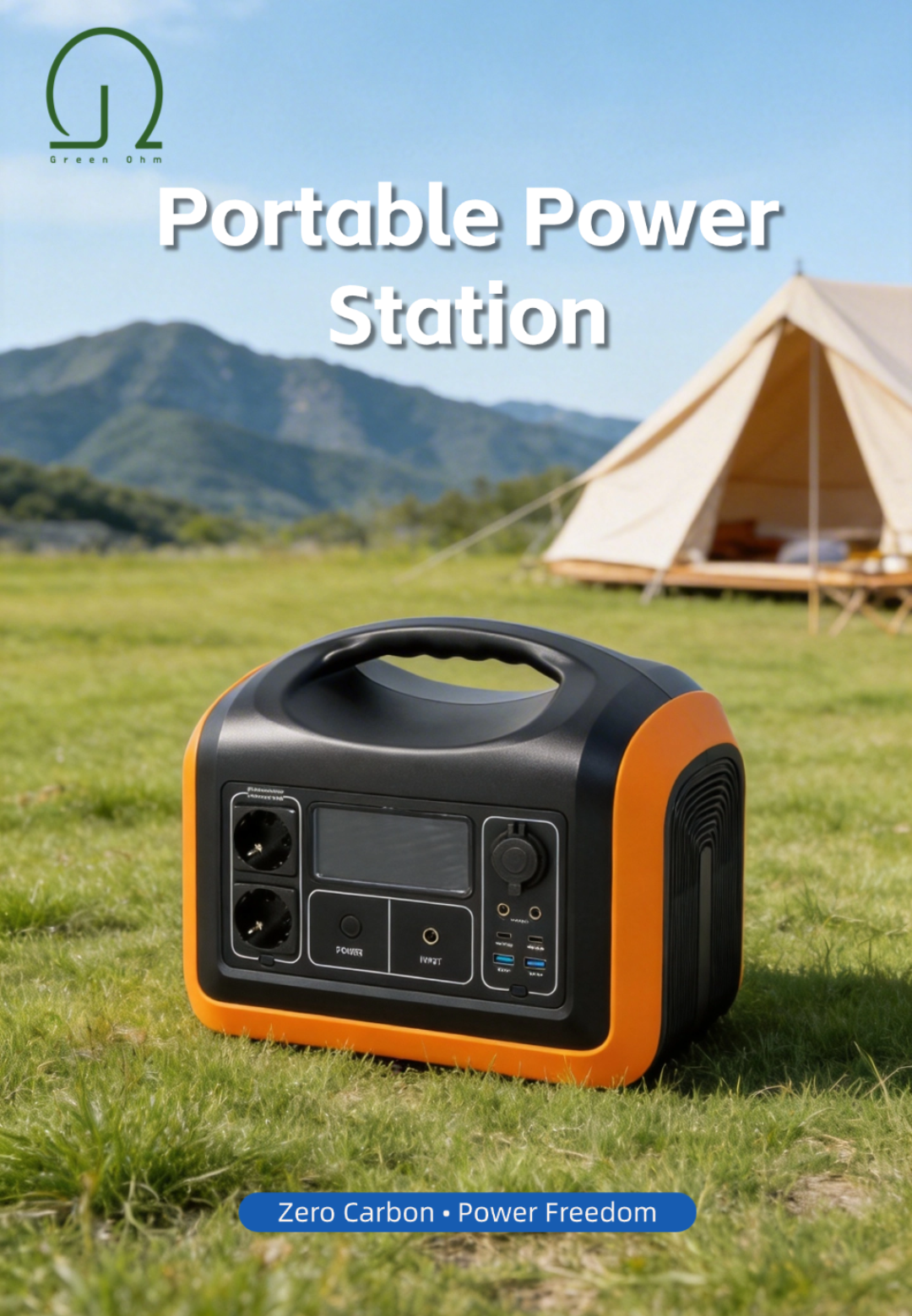
When evaluating an Outdoor Portable Power Station Factory, most procurement teams no longer focus only on peak wattage or unit cost. In 2026, B2B buyers across Europe and North America are prioritizing verified safety data, real-world discharge performance, and long-term cycle stability. For any serious LiFePO4 Portable Power Station Supplier, the real competition is no longer product appearance—it is engineering transparency under load conditions, from high-temperature van environments in the US Southwest to humid outdoor storage in Northern Europe.
Beyond Specifications: Why Certification Has Become a Buying Filter
In recent procurement cycles, distributors have become increasingly strict about compliance documentation. A qualified supplier must now demonstrate system-level certifications such as ISO 9001 for quality management, ISO 14001 for environmental systems, and ISO 45001 for occupational safety.
On the product side, CE, IEC, and EMC compliance are no longer optional—they are baseline requirements for retail entry in most regulated markets. Large retail chains and industrial distributors often review these documents before approving any purchase order. Without them, even technically strong products may be rejected at the distribution stage.
Real-World Performance: The Shift Toward Stress Testing Data
Modern buyers are asking a different kind of question: not “what is the capacity?” but “how does it perform under sustained load?”
A typical concern is continuous discharge at 1C rate. Under this condition, weak thermal design or unstable BMS logic can lead to voltage fluctuation or premature degradation. Leading Outdoor Portable Power Station Factory partners now provide full-load test reports, including discharge curves, temperature mapping, and inverter efficiency logs.
This shift reflects a broader trend: procurement teams are reducing risk by demanding measurable operational data instead of brochure-level specifications.
Thermal Stability: The Hidden Factor Behind Product Lifetime
Although LiFePO4 chemistry is inherently stable, system-level design still determines real durability. Poor cell arrangement or insufficient spacing can create localized heat accumulation during sustained use.
For example, running a 600W continuous load over several hours can push internal temperatures beyond safe efficiency thresholds if cooling design is inadequate. High-end systems address this through optimized airflow channels, thermal sensors, and controlled cell compression structures.
A professional LiFePO4 Portable Power Station Supplier should be able to provide thermal imaging reports and explain how temperature is managed under continuous discharge scenarios.
Storage Efficiency: The Problem Buyers Often Overlook
One of the most frequently searched but rarely discussed issues is long-term storage efficiency. Many systems experience gradual parasitic drain during idle periods, which can become a serious problem in warehouse or seasonal inventory environments.
Advanced units are now designed with ultra-low standby consumption, often targeting minimal monthly loss rates through optimized BMS architecture. Some systems even include deep sleep modes that physically isolate non-essential circuits.
For procurement teams managing distributed inventory, this feature directly reduces after-shipment maintenance costs and return rates.
What Engineers Ask Before Approving a Supplier
Based on technical procurement discussions, engineers increasingly rely on structured verification questions before approving any LiFePO4 Portable Power Station Supplier:
- Cell traceability: Are Grade A prismatic cells used, with serial-level tracking?
- Cycle life validation: Is performance tested to 80% SOH under defined DoD and temperature conditions?
- Load compatibility: Can inverter systems support mixed loads without voltage instability?
- System integration: Is CAN bus or RS485 communication supported for energy ecosystem integration?
- Service infrastructure: Are spare parts and firmware support systems regionally available?
These questions are now standard in industrial procurement workflows, especially in energy storage and outdoor equipment distribution channels.
Logistics Reliability and After-Sales Engineering Support
Beyond production, logistics consistency has become a key evaluation factor. Buyers expect shock-tested packaging (often validated by ISTA standards), clear pallet stacking documentation, and predictable RMA processes.
A mature Outdoor Portable Power Station Factory typically provides full shipment transparency, including packaging structure photos and quality inspection records before dispatch. This reduces dispute rates and improves trust in cross-border procurement.
From Price Competition to Engineering Transparency
The portable power station market has entered a more mature stage. Procurement decisions are no longer driven by pricing alone but by verified engineering data, compliance readiness, and long-term reliability.
For any LiFePO4 Portable Power Station Supplier, success now depends on the ability to provide measurable proof—thermal reports, cycle test data, certification files, and system integration capability. In 2026, the strongest suppliers are not those who simply claim performance, but those who can demonstrate it under documented conditions.