English
 Español
Green Ohm
Green Ohm
Green Ohm
Green Ohm
Green Ohm
Green Ohm
Green Ohm
Green Ohm
Green Ohm
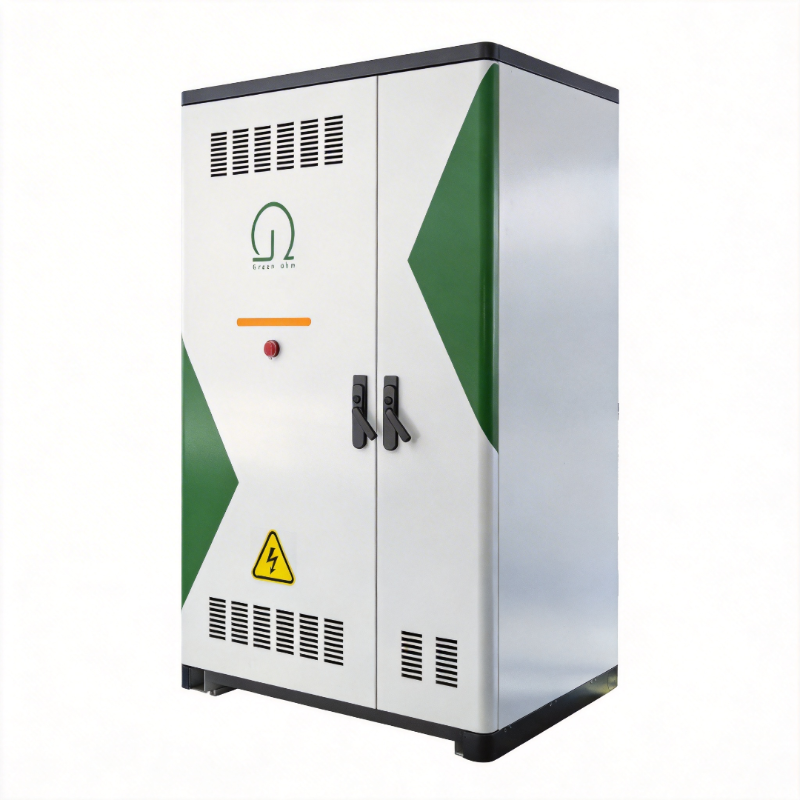
As battery energy storage systems become more powerful and more closely integrated with renewable generation, industrial facilities, and increasingly demanding electricity loads, thermal management is receiving greater attention from project developers and engineers. Recent industry discussions have shifted toward the infrastructure supporting battery reliability, including cooling, fluid handling, system monitoring, and serviceability. For buyers evaluating an Industrial BESS Supplier, understanding how a system manages heat can be just as important as reviewing battery capacity and chemistry.
Why Does Battery Temperature Matter?
Battery cells operate within a defined temperature range, and uneven or excessive heat can affect system performance, aging, and operational stability. As BESS installations become more compact and power-intensive, thermal management has become a more visible part of system engineering rather than a secondary consideration.
For procurement teams, the key question is not simply whether a BESS includes a cooling system. It is whether the cooling architecture is appropriate for the battery configuration, operating profile, installation environment, and expected service conditions.
Air Cooling or Liquid Cooling?
Different BESS projects can require different approaches. Air cooling can offer a relatively straightforward system architecture, while liquid cooling can provide more controlled heat transfer for high-density battery configurations. Current 2026 industry coverage shows growing attention to liquid cooling as storage systems become more compact and power requirements increase.
Rather than treating one technology as suitable for every project, buyers should examine:
- Battery density and cabinet configuration
- Expected charge and discharge cycles
- Ambient temperature range
- Available installation space
- Maintenance requirements
- Auxiliary energy consumption
These factors provide a more useful basis for comparing cooling solutions than technology labels alone.
What Should Engineers Examine Inside the Cooling System?
A cooling system is more than a fan, heat exchanger, or liquid circuit. Its effectiveness depends on how components interact with the battery modules, control system, sensors, and electrical architecture.
During technical evaluation, engineers should ask how temperature is monitored across the battery system, how abnormal conditions are detected, and how cooling output responds to changing operating loads. A well-integrated design should allow the battery management and thermal management systems to work together rather than operating as isolated subsystems.
From our manufacturing perspective, this integration is reviewed during system design because cooling requirements can influence cabinet layout, module arrangement, electrical connections, and service access.
Site Conditions Can Change the Cooling Requirement
A BESS designed for a mild climate may face very different operating conditions when installed in a hot or humid region. Outdoor systems can also encounter dust, solar exposure, seasonal temperature changes, and restricted airflow.
For overseas buyers, site information should therefore be included early in the RFQ process. Useful information includes local ambient conditions, installation altitude where relevant, indoor or outdoor placement, ventilation conditions, and available auxiliary power.
This allows the supplier to assess thermal requirements before the equipment configuration is finalized instead of attempting to solve environmental problems after installation.
Cooling Also Affects Maintenance Planning
Thermal management should be considered from a maintenance perspective. Filters, pumps, fans, heat exchangers, coolant circuits, sensors, and related components may require inspection depending on the selected architecture.
A procurement specification can therefore include practical questions such as:
- Which cooling components are serviceable on site?
- How are temperature and cooling alarms communicated?
- What maintenance documentation is provided?
- Are critical replacement components available?
- How is system performance monitored after commissioning?
These questions help facility operators understand the operational responsibilities associated with the BESS before signing a supply agreement.
Don't Separate Cooling From Safety
Thermal management and battery safety are closely connected, although cooling should not be presented as a replacement for dedicated protection systems. A properly engineered BESS combines thermal monitoring with battery management, electrical protection, fire detection, emergency controls, and other safety measures appropriate to the project.
Current BESS procurement discussions increasingly emphasize technical specifications, safety requirements, testing, and risk allocation during the contracting process. For buyers, reviewing these elements together can reveal gaps that may not be visible when comparing battery capacity alone.
Choose a Supplier That Can Explain the Complete System
For B2B buyers, a cooling specification should be supported by clear engineering information rather than broad claims about efficiency or safety. As a manufacturer, we recommend providing system diagrams, operating conditions, monitoring functions, maintenance requirements, and interface information during the technical evaluation stage.
For EPC contractors, industrial facility owners, renewable energy developers, and distributors, this approach makes supplier comparisons more practical. When battery architecture, cooling, controls, safety, and service requirements are evaluated as one system, an Industrial BESS Supplier can be assessed on its actual engineering capability rather than battery capacity alone.